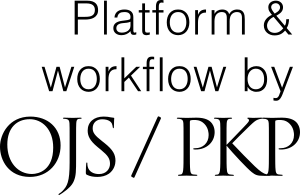
Responsible Generative AI Capability, Decision-Making Quality and Sustainable Performance: Evidence from Vietnamese SMEs
DOI:
https://doi.org/10.65150/EP-jefrr/V2E11/2026-11Keywords:
generative AI, responsible AI capability, managerial decision-making quality, sustainable performance, SMEs, Vietnam.Abstract
This study investigates the relationships among responsible generative artificial intelligence capability (RGAIC), managerial decision-making quality (MDQ) and sustainable performance (SP) in Vietnamese small and medium-sized enterprises (SMEs). Drawing on the resource-based view and the triple bottom line, RGAIC is conceptualised as a higher-order organisational capability combining GenAI integration, data governance and security, output verification and fairness, and human oversight and accountability. A cross-sectional survey yielded 300 valid managerial responses from 300 GenAI-using SMEs in Hanoi. A two-stage partial least squares structural equation modelling (PLS-SEM) procedure and 5,000 bootstrap resamples were employed. The reported results show positive associations between RGAIC and MDQ (β = 0.431), RGAIC and SP (β = 0.211), and MDQ and SP (β = 0.288). The indirect association via MDQ is also positive (β = 0.124), consistent with complementary mediation. The model explains 18.6% of the variance in MDQ and 18.0% in SP. The findings shift attention from access to GenAI tools toward organisational capability to use them responsibly, while identifying decision quality as one plausible pathway linked to sustainability outcomes. Because the data are cross-sectional and non-probability sampled, causal and population-wide claims are not warranted.
References
1) Akbarighatar, P. (2025). Operationalizing responsible AI principles through responsible AI capabilities. AI and Ethics, 5(2), 1787–1801. https://doi.org/10.1007/s43681-024-00524-4
2) Alwakid, W. N., & Dahri, N. A. (2025). Harnessing AI capabilities and green entrepreneurial orientation for sustainable SME performance using SEM analysis approach. Technology in Society, 83, 103007. https://doi.org/10.1016/j.techsoc.2025.103007
3) Autio, C., Schwartz, R., Dunietz, J., Jain, S., Stanley, M., Tabassi, E., Hall, P., & Roberts, K. (2024). Artificial Intelligence Risk Management Framework: Generative Artificial Intelligence Profile (NIST AI 600-1). National Institute of Standards and Technology. https://doi.org/10.6028/NIST.AI.600-1
4) Badghish, S., & Soomro, Y. A. (2024). Artificial Intelligence Adoption by SMEs to Achieve Sustainable Business Performance: Application of Technology–Organization–Environment Framework. Sustainability, 16(5), 1864. https://doi.org/10.3390/su16051864
5) Bahaw, P., Forgenie, D., Sadiq, G., & Sookhai, S. (2025). Generative AI for business sustainability: Examining usability, usefulness, and triple bottom line impacts in small and medium enterprises. Sustainable Futures, 10, 100815. https://doi.org/10.1016/j.sftr.2025.100815
6) Barney, J. B. (1991). Firm resources and sustained competitive advantage. Journal of Management, 17(1), 99–120. https://doi.org/10.1177/014920639101700108
7) Government of Vietnam. (2021). Decree No. 80/2021/ND-CP of 26 August 2021 detailing and guiding implementation of certain provisions of the Law on Support for Small and Medium-Sized Enterprises. https://vbpl.vn/bonongnghiep/Pages/vbpq-thuoctinh.aspx?ItemID=158783
8) Elkington, J. (1997). Cannibals with forks: The triple bottom line of 21st century business. Capstone.
https://books.google.com/books?id=QLg9PgAACAAJ
9) Feuerriegel, S., Hartmann, J., Janiesch, C., & Zschech, P. (2024). Generative AI. Business & Information Systems Engineering, 66, 111–126. https://doi.org/10.1007/s12599-023-00834-7
10) Guthrie, C. H., Fosso-Wamba, S., Queiroz, M. M., & Cai, H. (2025). The impact of artificial intelligence capabilities on decision-making performance: A longitudinal study. Journal of Global Information Management, 33(1), 1–27. https://doi.org/10.4018/JGIM.395344
11) Hair, J. F., Jr., Hult, G. T. M., Ringle, C. M., & Sarstedt, M. (2022). A primer on partial least squares structural equation modeling (PLS-SEM) (3rd ed.). Sage.
12) Khan, E. A., & Quaddus, M. (2015). Development and validation of a scale for measuring sustainability factors of informal microenterprises – A qualitative and quantitative approach. Entrepreneurship Research Journal, 5(4), 347–372.
https://doi.org/10.1515/erj-2014-0017
13) Liu, A., & Wang, S. (2024). Generative artificial intelligence (GenAI) and entrepreneurial performance: Implications for entrepreneurs. The Journal of Technology Transfer, 49(6), 2389–2412. https://doi.org/10.1007/s10961-024-10132-3
14) Mikalef, P., & Gupta, M. (2021). Artificial intelligence capability: Conceptualization, measurement calibration, and empirical study on its impact on organizational creativity and firm performance. Information & Management, 58(3), 103434. https://doi.org/10.1016/j.im.2021.103434
15) Mikalef, P., Islam, N., Parida, V., Singh, H., & Altwaijry, N. (2023a). Artificial intelligence (AI) competencies for organizational performance: A B2B marketing capabilities perspective. Journal of Business Research, 164, 113998. https://doi.org/10.1016/j.jbusres.2023.113998
16) Mikalef, P., Lemmer, K., Schaefer, C., Ylinen, M., Fjørtoft, S. O., Torvatn, H. Y., Gupta, M., & Niehaves, B. (2023b). Examining how AI capabilities can foster organizational performance in public organizations. Government Information Quarterly, 40(2), 101797. https://doi.org/10.1016/j.giq.2022.101797
17) OECD. (2025a). Generative AI and the SME workforce: New survey evidence. OECD Publishing. https://doi.org/10.1787/2d08b99d-en
18) OECD. (2025b). AI adoption by small and medium-sized enterprises: OECD discussion paper for the G7. OECD Publishing. https://doi.org/10.1787/426399c1-en
19) Papagiannidis, E., Mikalef, P., & Conboy, K. (2025). Responsible artificial intelligence governance: A review and research framework. The Journal of Strategic Information Systems, 34(2), 101885. https://doi.org/10.1016/j.jsis.2024.101885
20) Rajaram, K., & Tinguely, P. N. (2024). Generative artificial intelligence in small and medium enterprises: Navigating its promises and challenges. Business Horizons, 67(5), 629–648. https://doi.org/10.1016/j.bushor.2024.05.008
21) Sahoo, S., Kumar, S., Donthu, N., & Singh, A. K. (2024). Artificial intelligence capabilities, open innovation, and business performance – Empirical insights from multinational B2B companies. Industrial Marketing Management, 117, 28–41. https://doi.org/10.1016/j.indmarman.2023.12.008
22) Someh, I., Wixom, B. H., Beath, C. M., & Zutavern, A. (2022). Building an artificial intelligence explanation capability. MIS Quarterly Executive, 21(2), 143–163. https://doi.org/10.17705/2msqe.00063
23) Hanoi People’s Committee. (2026). Plan No. 232/KH-UBND of 18 June 2026 on digital transformation for small and medium-sized enterprises in Hanoi, 2026–2030. https://vanban.hanoi.gov.vn/van-ban/ke-hoach-chuyen-doi-so-cac-doanh-nghiep-nho-va-vua-tren-dia-ban-thanh-pho-ha-noi-giai-doan-2026-2030-255303
Downloads
Published
Issue
Section
License
Copyright (c) 2026 Do Thi Kim Dung (Author)

This work is licensed under a Creative Commons Attribution 4.0 International License.